


From new African trustees to a growing network of Training Partners, APF is intentionally embedding African leadership and insight at the heart of its mission. In this article, Dave Stedman reflects on the progress made over the past few years in this important area of change for the charity.
Two years ago, I wrote an article for Impetus in which I posed the question, “How African is APF?” Since then, we have sought to become even more intentional about this. Some highlights include:
- A bi-annual conference for our most committed and active African Training Partners (ATPs), providing an opportunity to listen and learn from one another, share experience, identify challenges, and find solutions together. The bi-annual ATP conferences also help formalise previously ad hoc relationships and provide an opportunity for the wider APF team to enjoy inspiration, fellowship and worship together. The next of these will take place in Nairobi in September.
- Two Africa-based trustees have joined our board, bringing valuable cultural insights and perspectives to our discussions and decision making. Rose Mugabi from Uganda brings deep expertise in enabling women’s leadership in Africa and Kingston Ogango has recently accepted the role of vice-chair of the board of trustees. Personally, I greatly value Kingston’s advice as an informal sounding board.
- A network of ATPs across multiple countries now receives annual grants that enable them to deliver pastor training programmes and other initiatives that support local Christian leaders. While this approach has proven very cost-effective for the charity, reducing travel expenses for UK personnel for starters, it also helps our partners plan better, draws on their local knowledge and creativity and gives them more confidence in our commitment to support their work.
- Increasingly, ATPs (and our Africa-based trustees) are conducting in-country and cross-border monitoring and evaluation visits that were previously carried out by UK personnel. This shift has both reduced costs and enhanced cultural understanding.
- ATPs are also exploring and establishing local partnerships that would previously have been unlikely because APF lacked any permanent presence on the ground. For example, Lawson Limau in Zambia is pioneering a link with the Christian Broadcasting Network Southern Africa to introduce the Superbook discipleship training programme for children in Zambian churches.
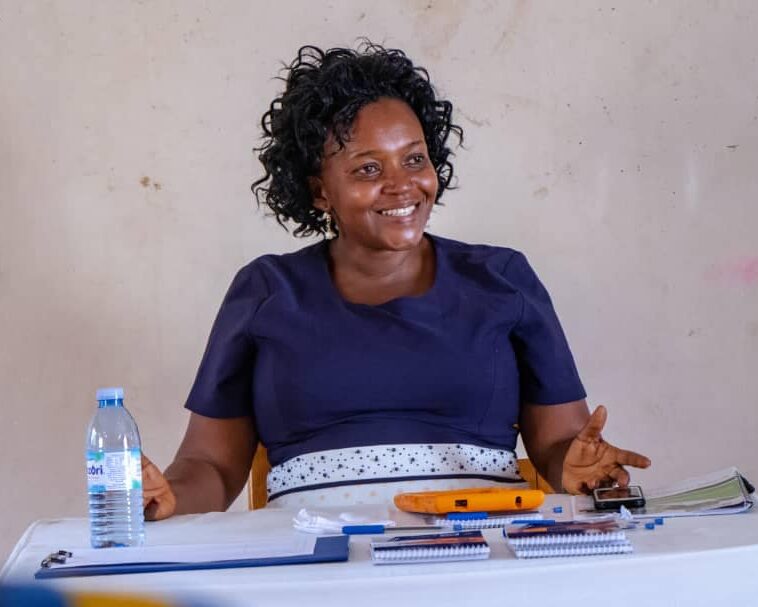

Trustees: Rose Mugabi and Kingston Ogango
- Likewise, Daniel Deng Bol in South Sudan is able to mobilise volunteers to assist in coordinating and delivering eVitabu workshops. This would not be possible without Daniel’s local connections and visibility.
For a long time, as I mentioned in the conclusion of the article in 2024, my aspiration has been to see an African Director of Operations (or similar) working alongside the existing UK-based team. Such a role would help secure these gains in the long-term, embed them in the DNA of the charity, and accelerate the ‘Africanisation’ of APF.
Beyond strengthening the leadership and support of our ATP network, I am convinced that despite the reality of widespread poverty across the continent, there is also considerable resource within Africa itself.
In the long-term, APF could be substantially resourced from within the continent. That is a healthy ambition if we are to increase the reach and influence of the mission – especially eVitabu – in the years ahead. Realistically, however, this potential can only be fully realised by a senior African leader set apart to develop it.
By empowering African leadership, APF is not just working in Africa, it is growing from Africa.